Crunch the Numbers: The Surprising True Cost of Making Your Own Photos
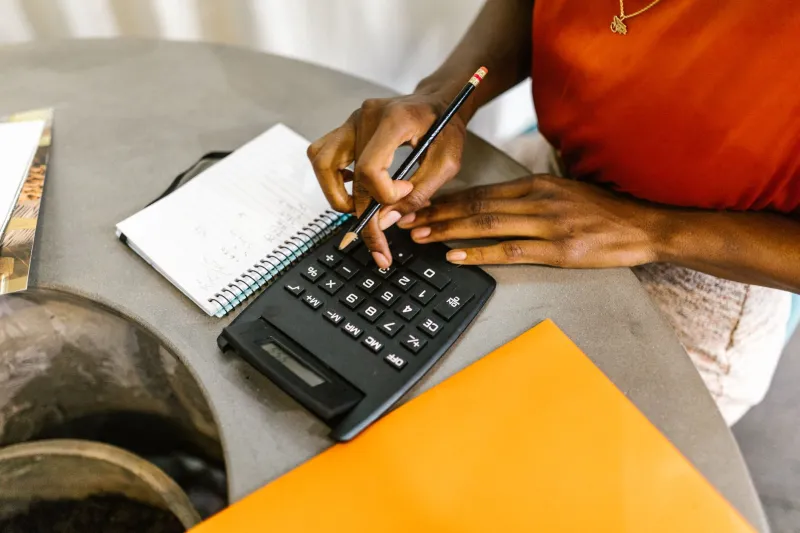
There's a certain appeal to the idea of making everything yourself. You control the look, the timing, and the message. For a lot of small business owners and freelancers across the US, DIY photography feels like the thrifty choice—skip the licensing fees, grab your phone or DSLR, and call it a day.
Except it rarely works out that way.
When you actually sit down and tally the full cost of producing original photography in-house, the number tends to creep up fast. Equipment, editing software, your own time, and sometimes hired help—it adds up to a figure that often clears what you'd spend licensing professional stock images by a significant margin. Let's break it down honestly.
The Gear Tab Alone Is Steep
A capable mirrorless camera body runs anywhere from $800 to $2,500 for a mid-range option. Add a versatile lens or two—say, a 35mm prime and a 50mm—and you're looking at another $600 to $1,200. A basic lighting kit, a tripod, memory cards, and spare batteries? Budget another $300 to $500.
So before you've taken a single shot, you're potentially sitting at $2,000 to $4,200 in startup costs. If you're a freelancer or a small business owner who shoots occasionally—not every week—that initial outlay takes a very long time to justify.
And that's before the software bill arrives.
Software Subscriptions Add Up Quietly
Adobe Lightroom and Photoshop, the industry standard combo for editing and retouching, runs about $55 per month through Adobe's Creative Cloud Photography plan. That's $660 a year. Capture One, a popular alternative among commercial photographers, starts around $24 a month for a subscription or $180 as a one-time perpetual license for a specific camera brand.
For someone who shoots infrequently, paying that monthly fee year-round feels a lot like leaving money on the table. But skipping the software means skipping color correction, cropping, and the basic retouching that separates a professional-looking image from a snapshot.
Time Is the Expense Nobody Writes Down
Here's where the real hidden tax kicks in: your time.
Let's say you run a small e-commerce brand in Austin or a boutique marketing agency in Chicago. You need eight solid product or lifestyle images for an upcoming campaign. A realistic DIY timeline might look like this:
- Planning and shot list creation: 1–2 hours
- Setting up the shoot (location scouting, lighting, props): 2–3 hours
- Actual shooting: 2–3 hours
- Culling and selecting usable images: 1 hour
- Editing and retouching each image: 30–60 minutes per photo
For eight images, you're realistically looking at 12 to 16 hours of work. If your billable rate—or the opportunity cost of your time—is $75 an hour, that's $900 to $1,200 in labor value, minimum. At $100 an hour, you're at $1,200 to $1,600.
Now compare that to browsing Stockpholio, finding eight high-quality licensed images that match your brand's aesthetic, and downloading them in under an hour. Even at a generous per-image licensing rate, you're spending a fraction of what the DIY route costs in time alone.
When You Bring In Outside Help, the Budget Explodes
Not everyone has the skills or the patience to handle photography solo. Hiring a freelance photographer for a half-day shoot in a major US market typically runs $500 to $1,500, depending on experience and location. Add a stylist or prop sourcing costs, and you can push past $2,000 for a single session.
For a startup or a one-person shop trying to keep overhead low, that's a real hit. And it's a recurring cost—because your visual content needs change constantly. New products, seasonal campaigns, fresh social content. Every time your needs shift, the meter starts running again.
The Break-Even Math Is Telling
Let's run a simple scenario. Suppose a small business needs 40 licensed images per year for their website, social media, and marketing materials. At an average licensing cost of $15 to $30 per image on a quality stock platform, that's $600 to $1,200 annually—all-in.
To produce those same 40 images in-house from scratch, you're looking at:
- Gear amortized over two years: ~$1,500
- Software subscription: $660
- Time (at a conservative $75/hour for 60+ hours of work): $4,500+
Total DIY cost, year one: roughly $6,660 or more.
The stock licensing route wins by a factor of five or six. Even in year two, when you're not buying new gear, the time cost alone keeps DIY firmly in the expensive column.
Quality Is Part of the Equation Too
Beyond the dollars, there's a consistency factor worth acknowledging. Professional stock images are shot by experienced photographers using commercial-grade equipment and lighting. The images are edited, color-graded, and ready to use. When you're building a brand or pitching a client, that visual quality matters.
DIY results are variable, especially when you're learning on the job. Inconsistent lighting, awkward compositions, and muddy edits can undercut the professionalism of your brand even when your actual product or service is excellent. That's a cost too—it just shows up in lost conversions and missed impressions rather than an invoice.
So When Does DIY Actually Make Sense?
To be fair, there are situations where in-house photography earns its keep. If your business genuinely requires highly specific, proprietary images—think custom product shots that don't exist anywhere else, or real photos of your actual team and workspace—then shooting original content makes sense. Authenticity has real value, and there are images that simply can't be sourced from a stock library.
But for lifestyle scenes, conceptual images, backgrounds, textures, seasonal content, and the dozens of other visual needs that creatives and marketers face daily? Licensed stock photography is almost always the smarter financial call.
The Takeaway
The idea that DIY is automatically cheaper is one of the most persistent myths in the creative and small business world. When you account for gear, software, and especially time, making your own photos is often one of the most expensive choices you can make.
Licensing professional stock images through a platform like Stockpholio gives you access to high-quality visuals at a predictable cost, freeing up your time and budget for the work that actually grows your business. Sometimes the most efficient creative decision isn't picking up a camera—it's knowing when not to.